Home / Guides / Towing and weights
Towing and weights
GVM upgrades: when a van or ute needs one, what it costs, the paperwork
A GVM upgrade raises how much your vehicle may legally weigh, using approved suspension and paperwork. It can fix a payload problem. It usually does not raise the combination limit, and done after registration it can cost you towing capacity.
Hitch & HighwayChecked 3 October 20268 min read
Quick answer
A GVM upgrade fits approved suspension (and sometimes axle) components and re-rates the vehicle's maximum loaded weight. Pre-registration upgrades are fitted to new vehicles by an approved second-stage manufacturer; post-registration upgrades need state approval, such as a VASS certificate in Victoria. Prices start around a few thousand dollars fitted. It usually does not raise GCM.
When you need one
When your loaded vehicle, with its accessories, people, gear and the tow ball weight, is at or over its GVM. Canopies, trays, drawers, bar work, a second battery and water add up fast; the calculator shows how close you are.
Pre-registration or post-registration
- Pre-registration: done to a new, unregistered vehicle by a federally approved second-stage manufacturer, using an approved kit. The paperwork and compliance plate come with it, and it is usually the cheaper path.
- Post-registration: done to a registered vehicle, approved by the state. Outside WA and the NT, that usually means an authorised engineering signatory inspecting and certifying it (VASS in Victoria); WA requires a modification permit. Post-registration upgrades can reduce the vehicle's braked towing capacity.
What it does not change
Transport WA notes that federal second-stage approval for a GVM upgrade has not covered re-rating GCM since 2019, and in WA a GCM re-rating needs its own state approval. So if your limit is the combination, a GVM upgrade alone may not help: towing the full rated trailer still leaves the same total.
What it costs
Published examples vary widely with the vehicle and kit:
| Example | Price | Source and date |
|---|---|---|
| BYD Shark 6, Ironman GVM to 3,850 kg | From about $4,190 fitted | Oz Canopies, April 2026 |
| VW Amarok to 3,500 kg GVM, post-rego | $5,899 drive-in, drive-out | 4X4 Australia, January 2023 |
| Suzuki Jimny, pre-rego | About $3,000 installed | 4X4 Australia, January 2023 |
| LandCruiser 79, with rear axle upgrade | From $17,000 | 4X4 Australia, January 2023 |
What an upgrade physically involves
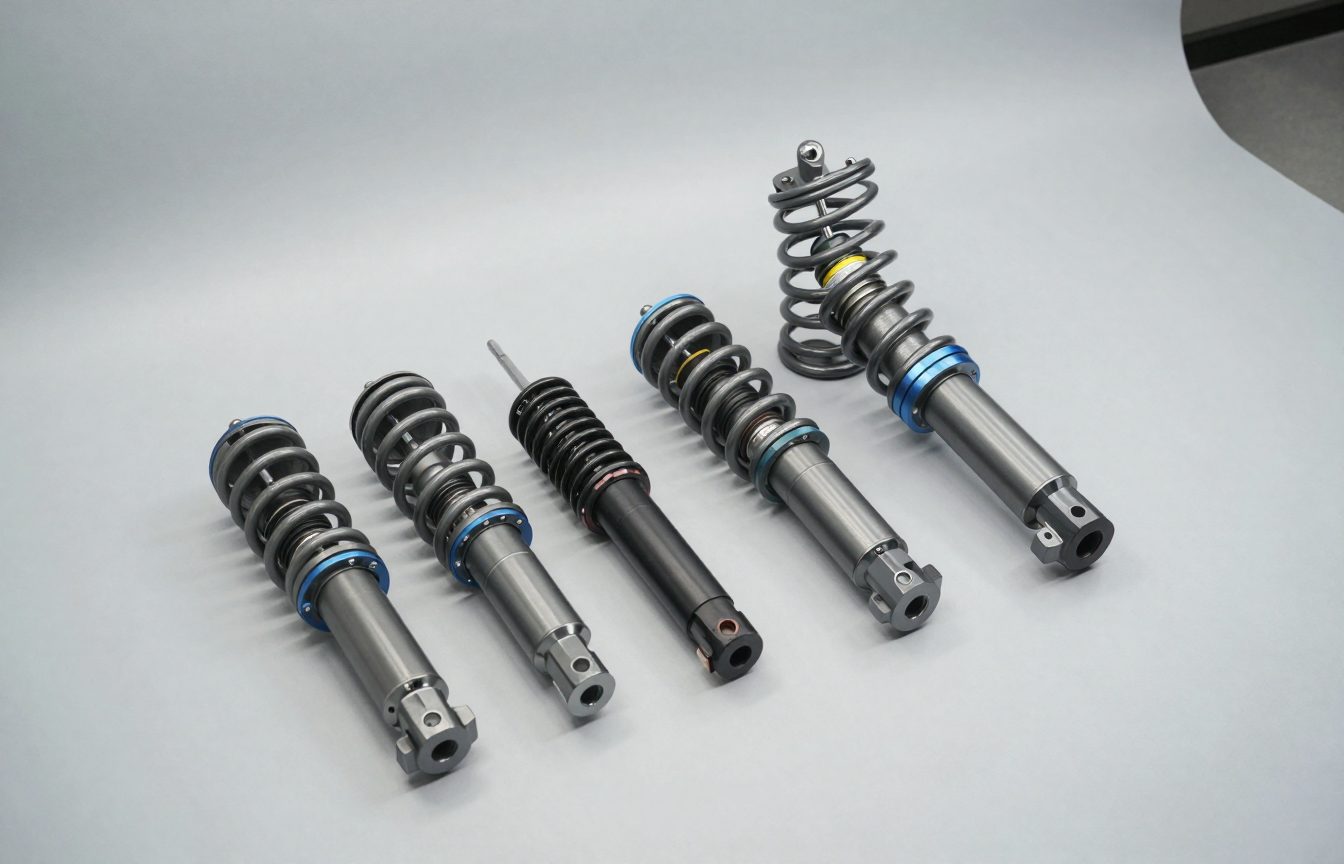
A GVM upgrade is a kit of approved parts plus the paperwork that says the vehicle may now weigh more. The parts usually include stronger rear springs, sometimes front springs too, matched shock absorbers, and in some kits higher-rated tyres, brake changes or, on heavier vehicles, a replacement rear axle. The kit is engineered and tested for that exact model, which is why one brand's kit for a Ranger cannot simply be fitted to a HiLux. The new GVM is shown on a plate or certificate, and that is the figure the vehicle is legally allowed to weigh.
The GCM catch, worked through
Take an illustrative ute with a 3,200 kg GVM, a 3,500 kg towing capacity and a 6,400 kg GCM, upgraded to a 3,500 kg GVM:
| Situation | Ute | Van | Total | Within GCM of 6,400 kg? |
|---|---|---|---|---|
| Before the upgrade, loaded to GVM | 3,200 kg | 3,200 kg | 6,400 kg | Yes, exactly |
| After the upgrade, ute loaded to new GVM | 3,500 kg | 3,200 kg | 6,700 kg | No: 300 kg over |
| After the upgrade, van reduced to fit | 3,500 kg | 2,900 kg | 6,400 kg | Yes |
If the GCM does not change, every extra kilogram you load into the ute comes off what the van can weigh. That is the point Transport WA makes in its GVM and GCM answers, and why a GVM upgrade can be the wrong fix for someone who tows a heavy van.
In NSW: who signs off a post-registration change
For changes to a registered vehicle in NSW, Transport for NSW points owners to certifiers licensed under the Vehicle Safety Compliance Certification Scheme. Its caravan guidance says that if you need to change your vehicle's towing capacity, you should seek advice from such a certifier. A post-registration GVM upgrade follows the same path: the work and the certification have to line up with the scheme's requirements, and the paperwork stays with the vehicle. Pre-registration upgrades are done before the vehicle is first registered, under federal second-stage manufacturer approvals, which the Department of Infrastructure explains.
Tell your insurer and your financier
A GVM upgrade changes the vehicle's specification. Tell your insurer once it is done, and keep the certificate with the registration papers. If the vehicle is under finance or a novated lease, check the contract too; some require approval for modifications. An undisclosed modification is an easy reason for a claim to be questioned after a crash.
Alternatives to an upgrade
Before paying for a GVM upgrade, check whether the payload problem can be solved by weight instead:
- A lighter canopy or tray. Aluminium canopies and trays can be much lighter than steel.
- Lithium instead of AGM for the second battery; our dual battery system guide covers the difference.
- Carry water in the van, not the ute, if the van has spare ATM.
- Leave the heavy recovery gear at home for bitumen trips.
- Rethink the drawers and fridge slide. Fit-outs are often the heaviest single item.
Weigh the vehicle as you actually use it first. Many owners find they are under GVM once the guesswork is replaced with a weighbridge ticket, and others find they are well over and an upgrade is the honest answer.
Questions to ask a GVM upgrade provider
- Is this a pre-registration or post-registration upgrade for my vehicle, and who certifies it?
- What is the new GVM, and does the GCM change at all?
- Does the upgrade change my braked towing capacity or tow ball rating?
- What parts are replaced, and what does it do to ride height and ride comfort unloaded?
- What warranty applies to the parts and the work, and does it affect the vehicle maker's warranty?
- What paperwork will I receive, and what do I need to show at rego time?
How to tell whether you need one
Work through it in this order, with a weighbridge ticket in hand rather than estimates:
- Weigh the vehicle loaded as you actually use it, with people, fuel, accessories and gear.
- If you tow, weigh it again with the van hitched, so the ball weight is included.
- Compare each figure with the GVM on the plate.
- If you are over, list what you could remove or lighten, from the alternatives above.
- If you are still over after that, or only just under with nothing to spare, a GVM upgrade is worth pricing.
- Then check the GCM: if you tow near the vehicle's full capacity, a GVM upgrade on its own may not solve the combination limit.
Transport for NSW's caravan guidance is to weigh the fully packed towing vehicle, including occupants, with the caravan hitched, and ensure it is under the GVM. That one measurement answers most of the question.
Upgrades and resale
A properly certified GVM upgrade can make a touring ute more attractive to the next owner, because the extra payload is often exactly what buyers need. An uncertified or poorly documented one does the opposite. Keep the certificate, the invoice and the parts list, and pass them on with the vehicle. Buyers, and their insurers, will ask.
Typical vehicles that end up needing one
The usual candidates are dual-cab utes and 4WDs set up for touring: a steel bullbar, winch, roof rack, canopy or tray with drawers, a fridge on a slide, a second battery, recovery gear, water and fuel, plus the family in the cabin. Each item is reasonable on its own; together they can add several hundred kilograms before the van's ball weight is counted. Vans used for trades, with heavy shelving and stock, are the other common case. If your vehicle fits either description, a weighbridge visit before you spend money on accessories, or on an upgrade, is the cheapest step you can take.
What changes on the road after an upgrade
Stiffer springs that suit a heavily loaded vehicle can make it ride firmer when empty, and a raised ride height changes how it feels in corners and how easy it is to load the roof. That is the trade-off for carrying more within the law. Ask the provider how the vehicle will ride unloaded, and whether they offer a kit tuned for a lighter everyday load with occasional heavy touring.
The paperwork to keep
| Document | Why you need it |
|---|---|
| Upgrade certificate or plate | Proves the new GVM to police, inspectors and buyers |
| Engineering or certifier report (post-registration) | Shows the work was certified under the right scheme |
| Invoice and parts list | Needed for warranty and for the next owner |
| Insurer's confirmation | Shows the modification was disclosed |
Keep copies in the glovebox and digitally. If a roadside check or an insurance claim ever turns on the vehicle's weight, these are what show it was legal.
GVM upgrades on vans and light trucks
GVM upgrades are not only for touring utes. Trade vans and cab-chassis light trucks are often upgraded because their fit-out and stock leave too little payload for a working day. The same rules apply: an approved kit for that exact model, the right certification for pre- or post-registration work, and no assumption that GCM or towing capacity changes. For a van, the alternative is often a lighter fit-out; our van shelving guide compares the weight of steel, aluminium and plywood systems.
A licence check for heavier vehicles
A standard NSW car licence covers vehicles up to 4.5 tonnes GVM. Most GVM upgrades on utes and vans stay under that, but on some larger vans and light trucks, an upgrade can take the vehicle over 4.5 tonnes, which then needs a light rigid licence and may bring other rules with it. Check the new GVM against your licence class before you book the work.
Timing: before or after you buy
If you are buying a new ute or van and already know it will carry a heavy fit-out or tow near its limit, ask the dealer about a pre-registration GVM upgrade before the vehicle is registered. It is usually simpler and cheaper than doing it later, and the paperwork comes with the vehicle from day one. Once the vehicle is registered, the post-registration path applies, with its certification steps and, on some models, a lower braked towing capacity afterwards. Deciding before delivery avoids paying for the more complicated route.
What a GVM upgrade will not do
- It will not raise the towing capacity, and a post-registration upgrade can lower it.
- It will not usually raise the GCM.
- It will not raise the tow ball rating of the towbar.
- It will not make an overloaded axle legal if the axle rating is the limit and the kit does not address it.
- It will not fix poor loading: heavy gear at the very back still unloads the front axle.
Read every one of those limits on your vehicle's plates and in the upgrade paperwork, and weigh the vehicle again after the upgrade with your normal load to confirm where you now stand.
Common questions
Does a GVM upgrade increase towing capacity?
No. It raises the vehicle's maximum loaded weight, not its towing capacity or usually its GCM, and a post-registration upgrade can reduce braked towing capacity.
How much does a GVM upgrade cost?
Published examples range from about $3,000 for a small 4WD to $4,000 to $6,000 for common utes, and much more where axles are replaced. Get a fitted, certified price for your exact vehicle.
Sources
- Transport WA, GVM and GCM FAQs
- Department of Infrastructure, second stage of manufacture
- 4X4 Australia, What is a GVM upgrade and do you really need one? (January 2023)
- Oz Canopies, BYD Shark 6 towing guide (Ironman GVM upgrade price, April 2026)
- Transport for NSW (Centre for Road Safety), Caravans (GVM, GCM, certifiers under the Vehicle Safety Compliance Certification Scheme)
Hitch & Highway is a towing and van gear store in preparation and is not trading yet.